Call Us: +6012-590 0783
Email Us: [email protected]
Follow Us: 


Call Us: +6012-590 0783
Email Us: [email protected]
Follow Us:


Timber remains one of the most widely used construction materials in Malaysia. From formwork and roof structures to renovation works, furniture manufacturing, and interior fit-outs, timber continues to support residential, commercial, and industrial construction projects. For contractors and developers sourcing materials from a timber supplier in KL, selecting the right supplier is essential to ensure consistent quality, reliable delivery, and efficient project execution.
However, the quality of timber supplied can significantly affect project outcomes. Poor-quality timber may lead to warping, splitting, excessive wastage, structural concerns, and costly delays. This is why selecting the right timber supplier in KL is about much more than finding the lowest price.
Whether you are a contractor, developer, renovation specialist, or property owner, understanding what to look for in a supplier can help ensure consistent material quality and smoother project execution.
Timber is a natural material, meaning quality can vary depending on species, grading, moisture content, storage conditions, and processing methods.
According to the Malaysian Timber Industry Board (MTIB), timber remains an important building material due to its strength-to-weight ratio, versatility, and sustainability when sourced responsibly. However, achieving optimal performance requires selecting timber suitable for its intended application.
According to Malaysian timber industry authorities, timber selection should consider factors such as species characteristics, strength properties, durability, and intended application. When working with a timber supplier, understanding these factors can help contractors choose materials that are better suited to project requirements, site conditions, and long-term performance expectations.
A reliable timber supplier in KL helps contractors obtain materials that match project specifications while reducing the risk of delays, installation issues, defects, and unnecessary material wastage.
Before selecting a timber supplier, consider the following seven key factors:
A good supplier should be able to support multiple project requirements rather than offering only limited timber options.
Construction projects often require different timber types for different purposes. For example:
| Application | Common Timber Requirements |
|---|---|
| Concrete formwork | Durable and cost-effective timber |
| Roof structures | Structural timber with good load-bearing properties |
| Renovation works | Dimensional timber and boards |
| Temporary site works | General-purpose construction timber |
| Interior projects | Appearance-grade timber products |
One advantage of working with an established supplier is access to multiple timber products from a single source, reducing procurement complexity and improving delivery coordination.
Not all timber performs the same way.
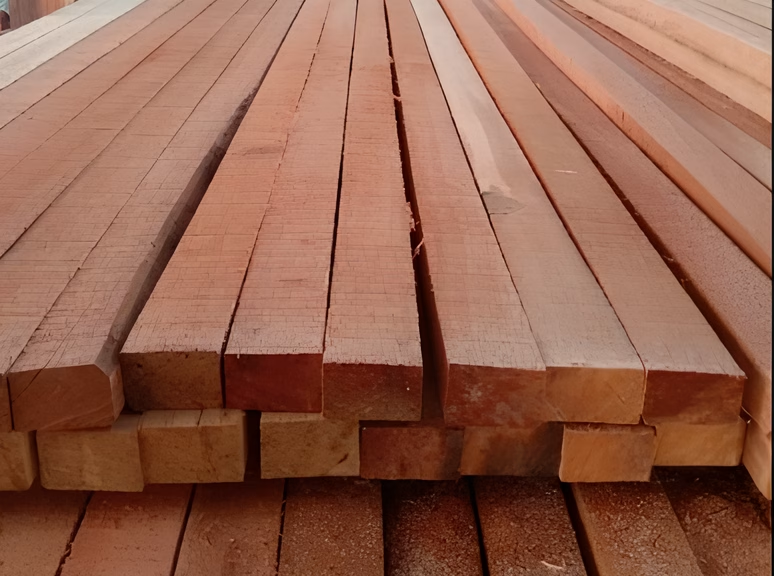
Different species possess different characteristics relating to durability, density, strength, and workability. One of the commonly used hardwoods in Malaysia is Meranti wood, which is frequently specified for construction, joinery, furniture, and general building applications.
A professional supplier should be able to explain:
This helps contractors choose the right material rather than relying solely on price comparisons.
Selecting the right timber involves more than choosing a species. Contractors should also consider how the timber will be used within the project.
Different applications require different performance characteristics, and using unsuitable timber may affect durability, efficiency, and overall project costs.
| Application | Important Timber Characteristics |
|---|---|
| Concrete Formwork | Strength, dimensional stability, and cost efficiency |
| Roof Structures | Structural performance and load-bearing capability |
| Renovation Works | Ease of cutting, installation, and consistency |
| Temporary Site Works | Availability and affordability |
| Furniture & Interior Works | Appearance, finish quality, and workability |
Discussing intended applications with your timber supplier can help ensure the selected material meets project requirements while reducing unnecessary wastage and replacement costs.
Material consistency is an important factor contractors should evaluate when selecting a timber supplier in KL.
Even when the correct species is supplied, inconsistent dimensions, excessive defects, or poor storage conditions can create challenges during installation.
Before purchasing timber, consider asking:
Consistent material quality can help reduce wastage, improve installation efficiency, and support better productivity on-site.
Many projects require repeated deliveries over several weeks or months.
A supplier that can only fulfil part of an order may create scheduling challenges, especially when construction activities depend on continuous material availability.
When evaluating a timber supplier in Kuala Lumpur, contractors should consider:
This becomes particularly important for commercial developments, industrial projects, and large-scale renovation works where material shortages can disrupt construction schedules.
Construction projects rarely operate according to perfect timelines.
Delays caused by late material deliveries can affect multiple trades and increase overall project costs.
An experienced supplier should be able to support:
For contractors working across Selangor and Kuala Lumpur, choosing a timber supplier with local delivery capabilities and project logistics experience can improve procurement efficiency and reduce material-related delays.
Many buyers naturally focus on obtaining the lowest possible quotation.
However, initial purchase price should be evaluated alongside material quality, durability, wastage rates, and overall project efficiency.
Poor-quality timber may result in:
A better approach is to evaluate total project value rather than simply comparing material costs.
| Lowest Price Focus | Value-Based Purchasing |
|---|---|
| Lower initial cost | Better long-term value |
| Potential quality inconsistencies | Greater material reliability |
| Higher wastage risk | Improved efficiency |
| Possible project delays | Better schedule control |
| Limited technical support | Professional supplier assistance |
For many contractors, reliable supply and consistent quality ultimately provide greater savings than selecting the cheapest available option.
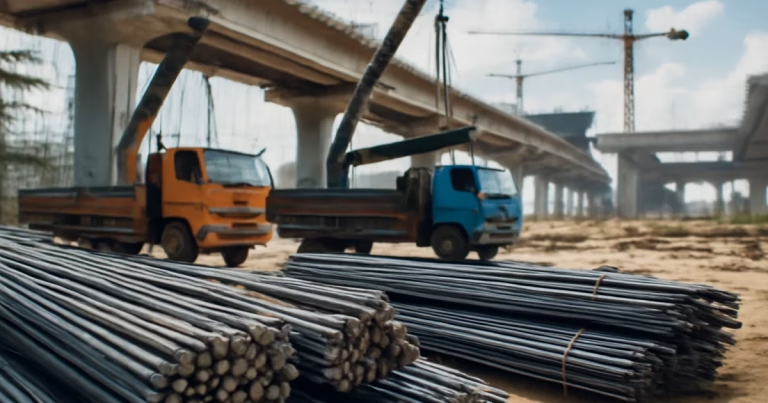
Construction projects rarely rely on timber alone. Depending on the stage of construction, contractors may also need cement, aggregates, reinforcement steel, bricks, concrete products, roofing materials, and other building supplies.
Working with a supplier that offers multiple material categories can provide several advantages:
This approach is particularly beneficial for commercial and industrial projects where multiple trades rely on materials arriving according to schedule. Consolidating procurement with fewer suppliers can help minimise logistical challenges and keep projects moving efficiently.
Choosing the right timber supplier in KL involves more than comparing quotations. Factors such as timber quality, species suitability, inventory availability, delivery reliability, and supplier experience can all influence project efficiency and overall costs.
Contractors and project owners who take the time to evaluate these factors are often better positioned to reduce material-related issues, minimise delays, and improve construction outcomes.
In addition, working with a supplier that can provide timber alongside cement, concrete products, bricks, reinforcement steel, and other building materials can help streamline procurement and simplify project coordination.
Whether you are managing a residential renovation, commercial development, industrial facility, or infrastructure project, partnering with a reliable supplier is an investment that can contribute to smoother project execution and long-term project success.
Whether you’re sourcing Meranti Timber for roofing and formwork or need cement, concrete, brick/block and sand/aggregate for a larger construction project, Ezi Maju supplies a comprehensive range of building materials for contractors, developers, and property owners across Kuala Lumpur and Selangor.
Contact our team today to discuss your project requirements and receive a quotation tailored to your construction needs.
Look for a supplier that offers consistent product quality, adequate inventory, reliable delivery services, and experience supporting construction projects in Kuala Lumpur and Selangor.
Most construction projects include a contingency allowance to account for cutting losses, design adjustments, handling damage, and natural timber variations. The exact amount depends on project complexity, timber dimensions, and installation requirements. Contractors should discuss expected wastage rates with their supplier during the planning stage to avoid material shortages.
Many building materials suppliers also provide cement, concrete products, bricks, steel reinforcement materials, and aggregates, allowing contractors to simplify procurement.
Timber should ideally be stored in a dry, well-ventilated area and protected from direct rain and prolonged sunlight exposure. Improper storage may cause moisture fluctuations that increase the risk of warping, swelling, or dimensional changes before installation. Following proper storage practices helps maintain material quality until it is ready for use.
Timber prices can be influenced by factors such as raw material availability, transportation costs, market demand, import conditions, and broader supply chain disruptions. Contractors working on larger projects may benefit from early procurement planning to reduce exposure to unexpected price increases or supply shortages.
Sourcing timber, cement, concrete products, bricks, steel reinforcement materials, and aggregates from a single supplier can help streamline procurement, improve delivery coordination, reduce administrative workload, and support more efficient project management.
Contact us today for high-quality materials and reliable solutions tailored to your construction needs.